

Exploring the World of Microbrand Watches
Discover microbrand watches from independent watchmakers including Baltic, MING, Kurono Tokyo and more in this guide to modern independent watch brands.
Heritage revival watch brands are historic Swiss marques that disappeared during the quartz crisis and have since been relaunched with archive-led designs. In enthusiast circles, they are sometimes labelled “zombie brands”. The term is blunt, and often inaccurate.
These are not modern microbrands starting from scratch. Nor are they global heavyweights such as OMEGA or TUDOR with uninterrupted production history. Heritage revival brands sit somewhere in between: established names with genuine mid-century credibility that fell dormant and later returned with a renewed focus on their archives.
That middle ground is becoming increasingly relevant.
Brands such as Vulcain, Nivada Grenchen and DOXA now offer something difficult to replicate elsewhere: authentic vintage design language, recognisable historical models and accessible price points, without the fragility or servicing uncertainty of buying true vintage.
The Swiss watch industry of the 1950s and 1960s was highly competitive. Dozens of manufacturers produced serious chronographs, dive watches and tool watches that pushed technical and design boundaries.
Then came the quartz crisis of the 1970s. Mechanical watchmaking contracted dramatically. Many family-owned firms collapsed. Others were absorbed into larger groups. Some trademarks simply sat unused for decades.
The revival of these brands did not happen overnight. It coincided with a shift in collector mindset during the 2010s and 2020s. Buyers became less interested in generic luxury positioning and more interested in narrative, authenticity and historical continuity. They wanted watches with context.
That shift created space for heritage revival brands to re-emerge.
Founded in 1858, Vulcain built its reputation around the Cricket alarm movement. The model became known as the “President’s Watch” after being worn by several US presidents during the mid-twentieth century.
The brand later faded from prominence and went through extended periods of dormancy before being revived with a renewed emphasis on archive-led designs.
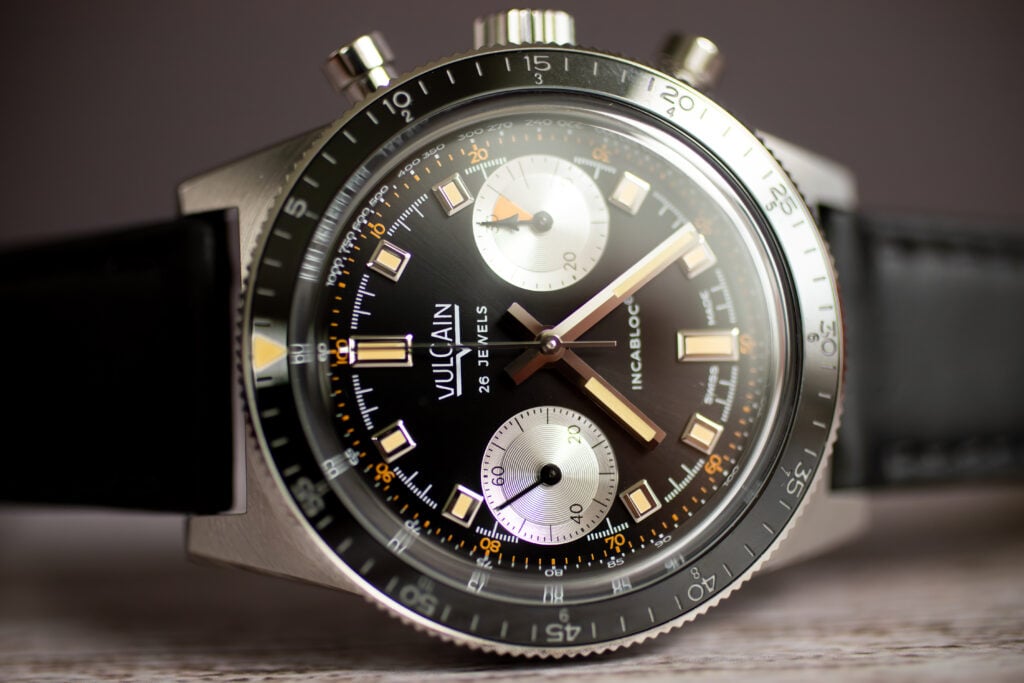
Modern Vulcain watches lean heavily into that heritage. Skindiver references, traditional case proportions and faithful dial layouts define much of the collection. The appeal is not trend-driven. It is rooted in mechanical identity.
A contemporary Vulcain Skindiver Chronograph delivers mid-century dive aesthetics with modern reliability and build quality. It does not feel like a homage. It feels like a brand revisiting its own history with intent.
DOXA’s trajectory is slightly different. Founded in 1889, the brand never disappeared entirely, but it operated at the margins of the industry for long stretches.
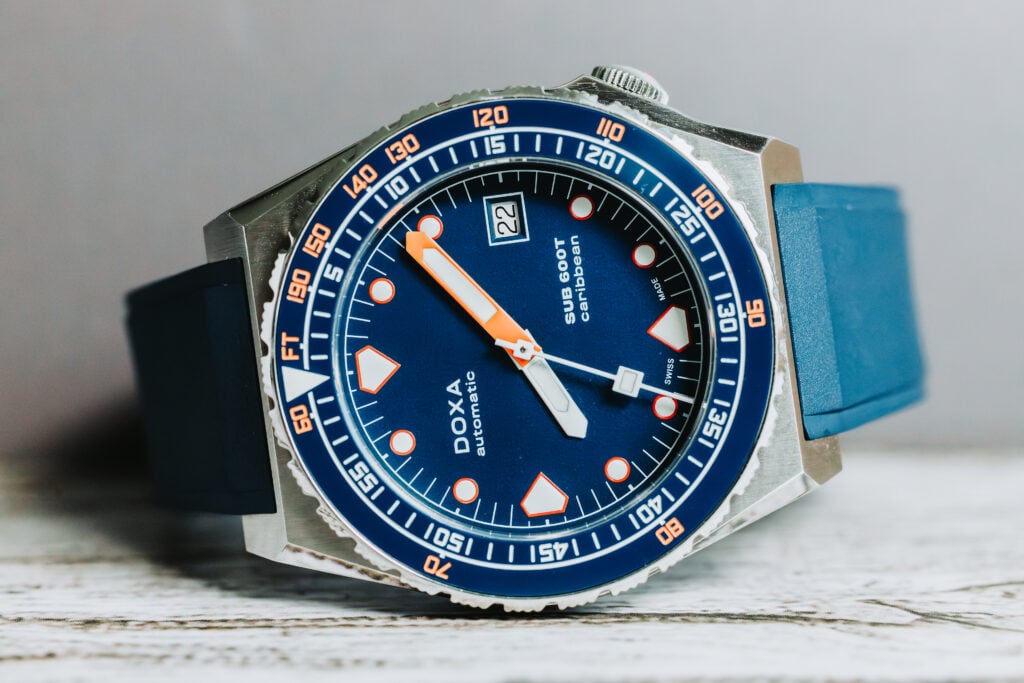
Its defining moment arrived in the late 1960s with the orange dial SUB models, developed with professional diving input and associated with Jacques Cousteau. That design decision created a cult following that still defines the brand today.
Modern DOXA watches remain unapologetically tool-focused. The SUB 600T, for example, carries forward that bold dive DNA. It is not subtle and it does not attempt to mimic mainstream sports models. It is distinctly DOXA.
In a market often dominated by safe, conservative design, that clarity of identity matters.
Nivada Grenchen was once a significant player in the 1960s sports watch era. Models such as the Chronomaster, Antarctic and Depthmaster competed directly within the serious tool watch segment of their time.
Like many peers, the brand struggled during the quartz era and eventually disappeared from mainstream visibility.
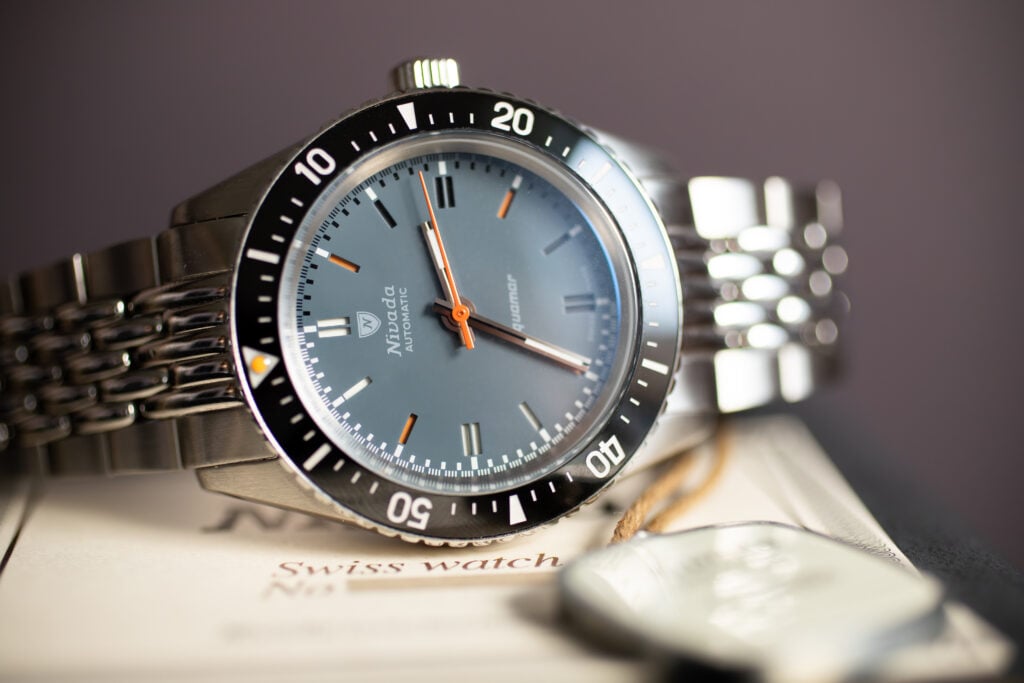
Its modern relaunch has been one of the more archive-faithful revivals in recent years. Case sizes remain restrained. Dial details are preserved. The design language feels historically grounded rather than aggressively modernised.
A model such as the Aquamar captures vintage sports watch aesthetics without the mechanical compromises associated with a sixty-year-old movement. For collectors who appreciate mid-century design but prefer contemporary reliability, that balance is compelling.
Heritage revival brands are not microbrands in the contemporary sense. They are not start-ups built around crowdfunding or social media-first marketing.
They also do not possess the scale, vertical integration or global marketing power of the major Swiss groups.
Instead, they appeal to a specific type of buyer:
There is also a pricing advantage. Many heritage revival watches sit comfortably below £2,000. That makes them accessible entry points into authentic Swiss history, rather than speculative fashion purchases.
Louis Erard does not fit neatly into the heritage revival category.
Founded in 1931, the brand never fully disappeared. Rather than being resurrected from dormancy, it repositioned itself. Its renewed relevance is built on focus rather than nostalgia.
Over the past decade, Louis Erard has centred its identity around the regulator complication. While most Swiss brands treat the regulator layout as an occasional variation, Louis Erard made it foundational.
Crucially, it paired that focus with intelligent collaboration. Partnerships with designers such as Alain Silberstein and independent watchmaker Konstantin Chaykin introduced bold design language and genuine collector appeal. These were not superficial limited editions. They were distinctive releases that re-established cultural relevance.
Louis Erard did not rely on archive resurrection. It was rebuilt through design clarity and strategic collaboration. That makes it a hybrid case: a legacy Swiss brand that reinvented itself rather than revived itself.
Heritage revival watch brands occupy a different space to established names such as OMEGA and TUDOR.
Mainstream Swiss brands offer uninterrupted production history, deep technical development and universal recognition. A Seamaster or Black Bay carries immediate brand equity that smaller revival marques cannot match.
Heritage revival brands offer something different: archive-driven design, relative scarcity on the wrist and access to genuine Swiss history at more accessible price points.
Neither route is inherently superior. The distinction lies in what the buyer values more. Recognition and industrial scale, or individuality and nuanced history.
Understanding that difference allows collectors to choose deliberately rather than by default.
A heritage revival watch brand is a historic watch company that became dormant during industry consolidation and was later relaunched using archive-inspired designs combined with modern manufacturing standards.
No. Microbrands are modern start-ups without historic lineage. Heritage revival brands have genuine mid-twentieth century history but were relaunched after periods of dormancy.
They are primarily enthusiast purchases rather than speculative investments. Their appeal lies in design authenticity and historical narrative rather than guaranteed resale performance.
Discover microbrand watches from independent watchmakers including Baltic, MING, Kurono Tokyo and more in this guide to modern independent watch brands.

A first-hand look at British Watchmakers’ Day 2026 at Lindley Hall, featuring Fears, Christopher Ward, Farer and more British watch brands.

Discover heritage revival watch brands including Vulcain, Doxa, Nivada Grenchen and Louis Erard. The return of forgotten Swiss icons.

Buying a pre-owned luxury watch in the UK has never been more popular. For many

The Rolex Daytona is one of the most recognisable chronographs ever produced. It is also

At MVS Watches, the question we hear most often from buyers looking at pre-owned OMEGA