

Three Blue Dive Watches to Consider Before Buying an OMEGA Seamaster
Explore three blue dive watch alternatives to the OMEGA Seamaster: Panerai Submersible, Triton Subphotique and Oris Aquis Pro. Compare fit and features.
Grand Seiko Spring Drive occupies an unusual position within the luxury watch market. It combines traditional mechanical power with quartz-regulated accuracy, exceptional Japanese finishing and a completely smooth seconds-hand movement that no mainstream Swiss competitor directly replicates.
Yet Grand Seiko continues to divide opinion. Enthusiasts praise its dials, movements and case finishing, while less familiar buyers sometimes struggle with the idea of paying several thousand pounds for a watch carrying the Seiko name.
So, is Grand Seiko Spring Drive overpriced?
Our view is no. The quality and engineering are genuine, although some models make a stronger financial case than others. For many buyers, the greatest value is found on the pre-owned market, where Grand Seiko’s softer resale values can provide access to extraordinary watchmaking at significantly below the original retail price.
Having bought, inspected, photographed and sold Grand Seiko watches at MVS Watches, we believe the brand remains one of the most overlooked names in modern luxury watchmaking.
This is the misconception Grand Seiko has spent decades trying to overcome.
Seiko is known throughout the world for producing accessible and dependable watches. Grand Seiko was created in 1960 with a different objective: to produce the finest watch possible using Japanese design, engineering and manufacturing.
Although both names share history, Grand Seiko now operates as a separate luxury brand with its own collections, specialist workshops, movements and manufacturing standards. Since 2017, its watches have carried Grand Seiko branding more prominently to reinforce that independent identity.
The relationship is not completely different from a major car manufacturer operating a separate luxury division, although Grand Seiko’s specialist movements and production methods make the separation particularly significant.
Once the watches are physically handled, the difference is immediately apparent. The cases, dials, hands, markers and movements are produced to a standard far removed from ordinary Seiko watches.
The challenge is that Grand Seiko’s quality is often subtle. It does not rely on an instantly recognisable case or conspicuous branding. Much of its appeal only becomes apparent when light catches the polished surfaces or the dial is examined closely.
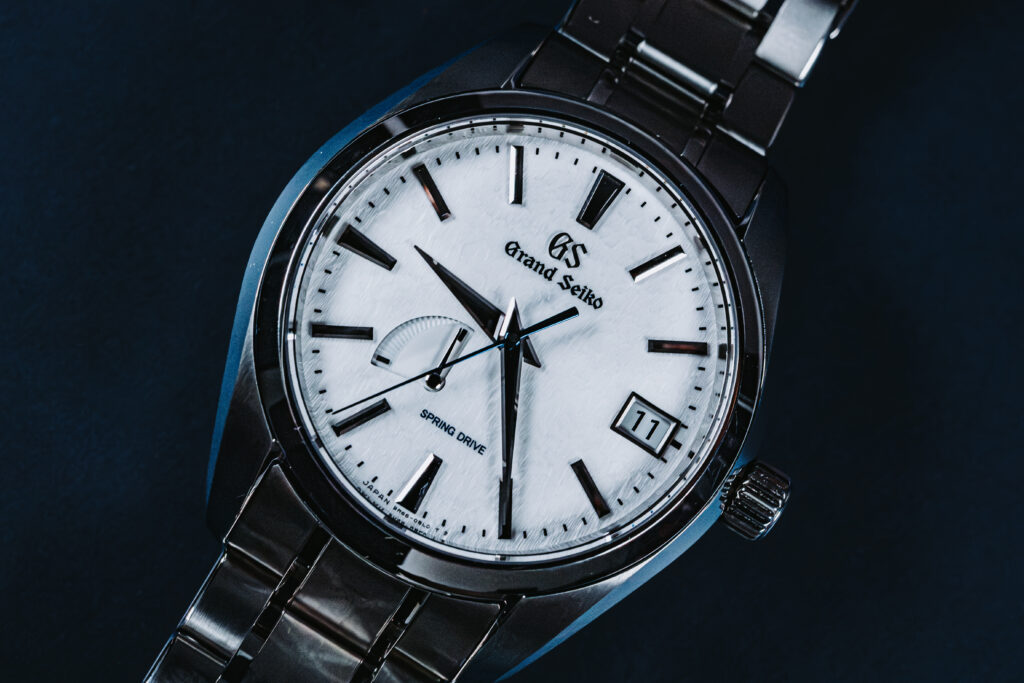
Grand Seiko’s case finishing is one of the clearest reasons its watches command luxury prices.
The brand is closely associated with Zaratsu polishing, a demanding technique used to produce flat, distortion-free mirror surfaces. These polished areas are combined with precisely brushed sections and sharply defined case edges.
Grand Seiko explains that mastering Zaratsu polishing takes years. This is important because many of its cases use broad surfaces and angular transitions that would expose inconsistent finishing immediately.
On the watches we have handled, these surfaces are noticeably different from conventional machine-polished cases. Reflections appear clean rather than distorted, while the transitions between polished and brushed areas remain crisp.
The effect is particularly impressive on Grand Seiko’s more angular cases, where every change in direction produces a different reflection. Even relatively simple three-hand models can feel considerably more intricate once seen in person.
This quality is difficult to communicate through standard catalogue photography. It is one of the reasons we photograph the actual Grand Seiko watches held in stock rather than relying entirely on manufacturer images.
Grand Seiko is perhaps best known for its textured dials.
Models such as the Snowflake, Shunbun and White Birch have helped establish a recognisable design language based on Japanese landscapes, seasons and natural textures. Other references draw inspiration from mountains, forests, lakes and changing light.
The accompanying stories can occasionally become elaborate, but the physical dial quality supports the marketing.
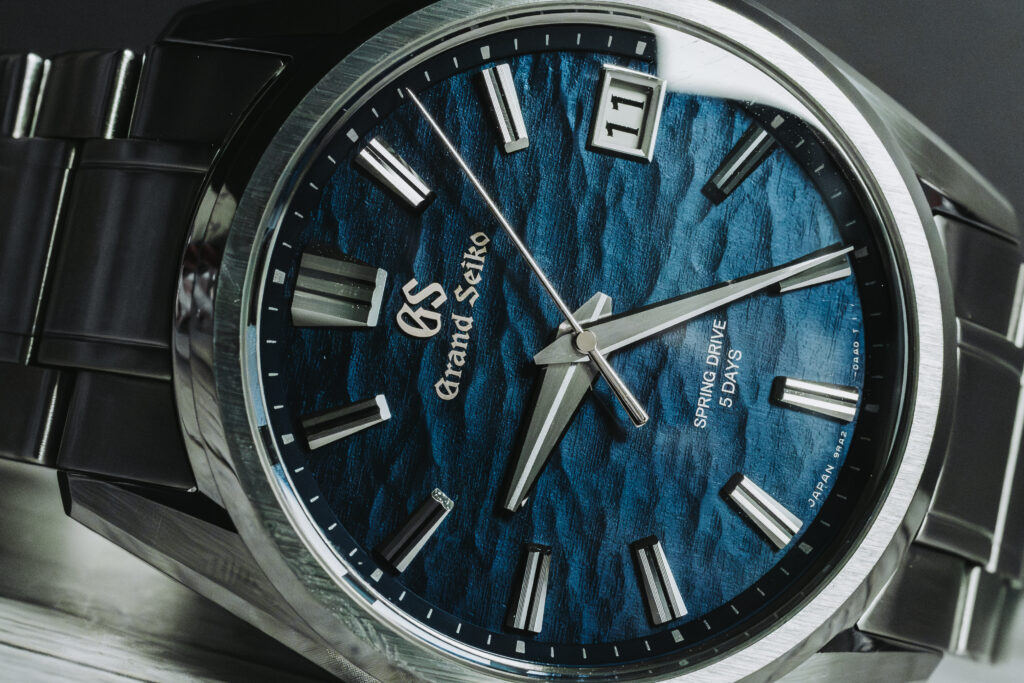
Textures that appear subtle in photographs often reveal much more depth in natural light. Applied hour markers are sharply cut and polished, while the hands are substantial, highly finished and designed for excellent legibility.
Grand Seiko pays particular attention to how these components reflect light. The polished surfaces allow the hands and markers to remain visible even when the dial itself is dark or heavily textured.
Having photographed several Grand Seiko watches, we regularly find that the images only capture part of the effect. The dials change considerably depending on their surroundings and the angle at which they are viewed.
This is not superficial decoration added to an ordinary watch. The dial, hands, case and movement are developed as a complete product.
Spring Drive is neither a conventional mechanical movement nor an ordinary quartz movement.
Like a mechanical watch, it is powered by a mainspring. The watch stores energy through manual winding or the movement of the wearer’s wrist, and that energy passes through a mechanical gear train to move the hands.
The difference is in how the movement regulates the release of that energy.
A conventional mechanical movement uses an escapement and balance wheel, producing the familiar ticking or sweeping motion of the seconds hand. Spring Drive instead uses Grand Seiko’s Tri-Synchro Regulator.
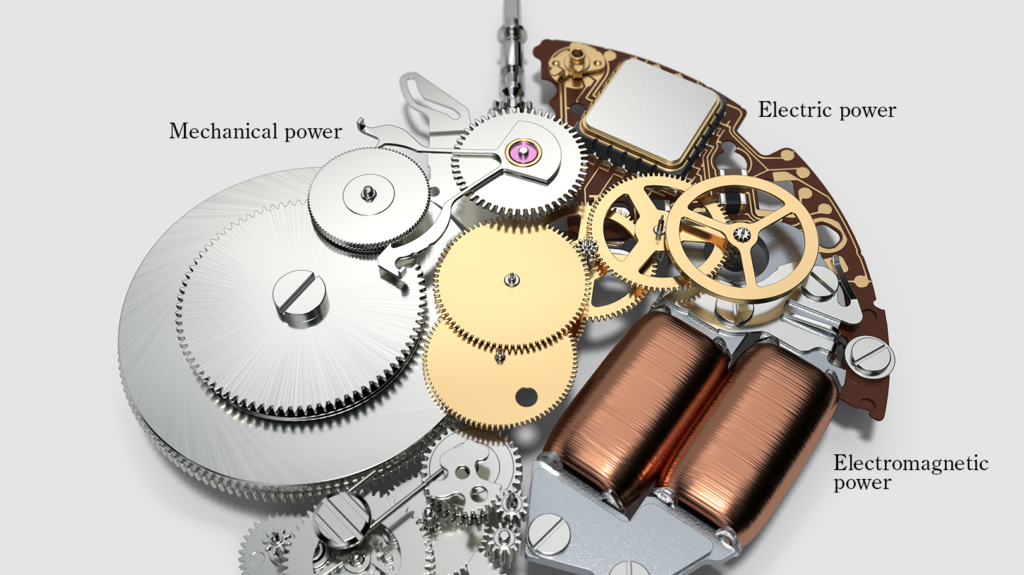
As the mainspring unwinds, the movement generates a small electrical current. This powers a quartz oscillator and integrated circuit, which monitor the rotation of a glide wheel. An electromagnetic brake then controls the speed at which the gear train moves.
There is no battery and the watch remains powered by its mainspring. The quartz element is used solely to regulate the movement with far greater precision than a conventional mechanical escapement normally permits.
Three forms of energy are involved:
The result is a movement that combines the traditional interaction of a self-winding mechanical watch with quartz-level precision.
The most visible feature of Spring Drive is its seconds hand.
Rather than ticking several times per second, the hand moves continuously around the dial without any visible stepping. Grand Seiko calls this glide motion.
It is easy to dismiss this as a novelty until you see it in person. The completely smooth movement gives the watch a calm and distinctive character, particularly when combined with one of Grand Seiko’s textured dials.
The hand does not imitate smooth movement by ticking at a very high frequency. It genuinely travels continuously because the movement does not use a conventional escapement to repeatedly stop and release the gear train.
Grand Seiko presents this as an expression of time flowing naturally and without interruption. The language may sound philosophical, but the mechanical result is unique and immediately recognisable.
Spring Drive is not only visually different. It is also extremely accurate.
The widely used automatic Calibre 9R65 provides approximately 72 hours of power reserve and is typically rated to within one second per day. That already exceeds what most conventional mechanical movements can achieve.
Newer Spring Drive U.F.A. movements have advanced claimed accuracy to approximately ±20 seconds per year, demonstrating how the technology continues to develop.
For an owner, this provides meaningful everyday benefits. A Spring Drive watch can retain the interaction and mechanical construction associated with traditional watchmaking without requiring frequent time corrections.
The power reserve also makes many models easy to rotate within a collection. A fully wound 72-hour watch can often be removed on Friday and still be running when worn again after the weekend.
This combination of accuracy, mechanical power and usability forms a substantial part of Grand Seiko’s value.
Spring Drive may be the brand’s most distinctive technology, but it does not define the entire range.
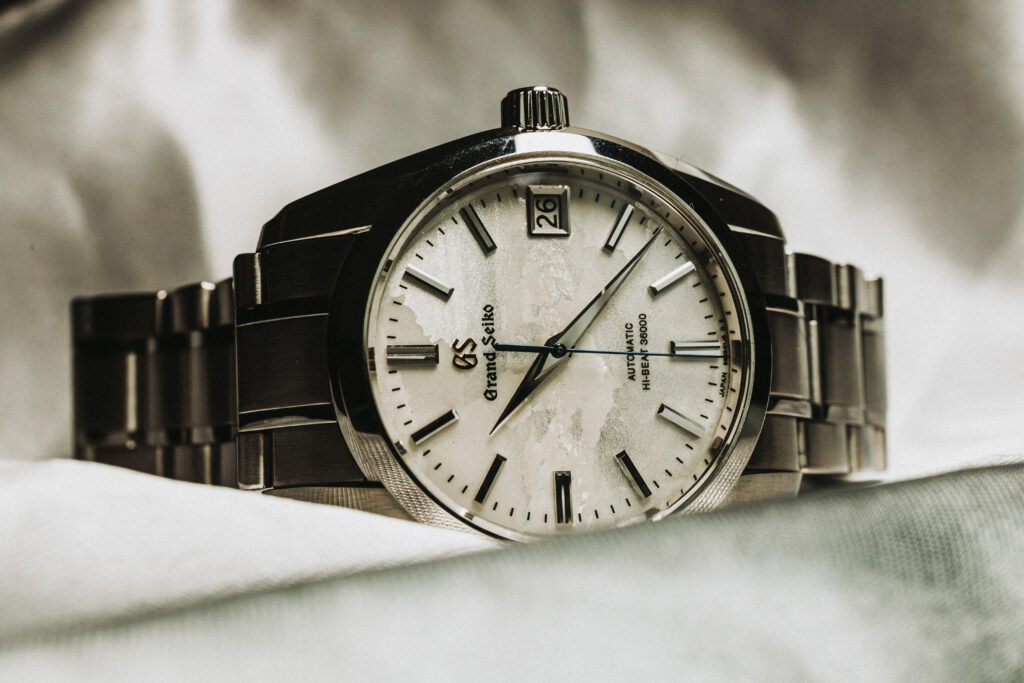
Grand Seiko’s 9S mechanical family includes automatic, manual-winding, GMT and Hi-Beat movements. Its high-frequency calibres operate at 36,000 vibrations per hour, or ten beats per second.
The current Calibre 9SA5 combines this high frequency with twin barrels, an 80-hour power reserve and Grand Seiko’s Dual Impulse Escapement. Its development demonstrates that Grand Seiko is equally capable of producing a sophisticated conventional mechanical movement.
For collectors who want Grand Seiko finishing but prefer a traditional escapement, these watches provide a strong alternative to Spring Drive.
The brand also produces 9F quartz movements with accuracy commonly rated to approximately ±10 seconds per year. These movements use high-torque motors, mechanisms designed to eliminate seconds-hand shudder and the ability to be regulated during future servicing.
A 9F watch will not appeal to every mechanical-watch enthusiast, but it should not be confused with ordinary mass-produced quartz. It offers Grand Seiko case and dial quality in a highly accurate, relatively slim and low-maintenance package.
Grand Seiko comfortably belongs within the same conversation as established Swiss luxury manufacturers.
At similar prices, buyers may also consider Rolex, OMEGA and Zenith. Each brand offers a different reason to purchase.
Rolex provides unrivalled recognition, strong bracelets and consistently high resale values. OMEGA combines considerable history with advanced Co-Axial movements and broad public recognition. Zenith has its own high-frequency mechanical heritage and is particularly respected for its chronograph movements.
Grand Seiko’s strengths are different. Its dials and case finishing can be exceptional for the money, while Spring Drive provides a movement experience unavailable from those competitors.
It is also a more discreet choice. A Grand Seiko rarely attracts the same general attention as a Rolex, but many collectors consider that a benefit. The quality is primarily for the person wearing the watch rather than for everyone else in the room.
Grand Seiko is therefore not attempting to be a Japanese copy of a Swiss luxury brand. Its appeal lies in offering a genuinely different approach.
Grand Seiko is not perfect, and the exact reference matters.
Some Spring Drive, GMT and sports models have relatively thick cases. The dimensions can work well because of the case shape and lug design, but buyers should check the thickness and lug-to-lug measurement rather than focusing only on diameter.
Bracelets and clasps have also received criticism. They are generally well made, but some references lack the taper and convenient micro-adjustment available from competitors. Grand Seiko has started addressing this with newer three-step, tool-free micro-adjustment clasps, although these are not present across the entire range.
The brand also releases a large number of special and limited editions. Some are highly distinctive, while others are primarily new dial variations. Buyers should choose the watch they genuinely prefer rather than assuming that every limited edition will become particularly collectable.
None of these points undermines the fundamental quality. They simply make it important to assess the individual watch rather than treating every Grand Seiko as identical.
Buying pre-owned is often the most convincing way to experience Grand Seiko.
Condition is especially important because the highly polished Zaratsu surfaces can show marks, and poor refinishing can soften the sharp edges of the case. Clear photographs of the actual watch are therefore essential.
Buyers should also consider:
Every Grand Seiko offered by MVS Watches is physically held in stock, inspected and photographed by us. We do not advertise examples that remain with an unknown third party, so the images and condition description relate to the watch being offered.
No. Grand Seiko Spring Drive is better described as overlooked quality.
The movement offers a combination of mechanical construction, exceptional accuracy and completely smooth hand movement that cannot be found elsewhere in quite the same form. The cases and dials show a level of detail that often becomes apparent only when the watch is physically handled.
At full retail price, buyers should compare individual references carefully, particularly once prices enter competition with the likes of Rolex, OMEGA and more recently TUDOR. However, that applies to any luxury watch rather than Grand Seiko alone.
On the pre-owned market, the argument becomes even stronger. Softer depreciation allows buyers to access the same finishing and movement technology at a price that can represent outstanding value.
Grand Seiko will not provide the instant recognition or resale strength of Rolex. What it offers instead is technical individuality, refined Japanese design and a standard of finishing that frequently exceeds expectations.
For collectors who care more about the watch on their wrist than the reaction to its name, Grand Seiko remains one of the most compelling luxury manufacturers available.
MVS Watches regularly buys and sells Grand Seiko watches across the Heritage, Elegance, Sport and Evolution 9 collections, including Spring Drive, mechanical Hi-Beat and limited-edition references.
Our available watches are physically held in stock, authenticated, inspected and photographed individually. Each is supplied with our warranty alongside any remaining manufacturer cover.
View our current selection of pre-owned Grand Seiko watches with free insured UK delivery.
Yes. Grand Seiko is a separate luxury manufacturer with specialist movements, dedicated production facilities and its own design and finishing standards. Its watches compete directly with established Swiss luxury brands.
Spring Drive uses a quartz oscillator for regulation, but it is powered by a mechanical mainspring and has no battery. Its gear train and power source operate mechanically, while an electromagnetic brake controls accuracy.
Accuracy depends on the calibre. Common 9R Spring Drive movements are often rated to approximately one second per day, while newer Spring Drive U.F.A. movements can achieve claimed accuracy of approximately ±20 seconds per year.
Spring Drive does not use a conventional escapement that repeatedly stops and releases the gear train. Its glide wheel rotates continuously under electromagnetic regulation, allowing the seconds hand to move without visible stepping.
It depends on the buyer’s priorities. Grand Seiko excels in dial work, case finishing, accuracy and movement individuality. Rolex generally offers stronger recognition and resale, while OMEGA offers broad movement technology and greater mainstream familiarity.
Explore three blue dive watch alternatives to the OMEGA Seamaster: Panerai Submersible, Triton Subphotique and Oris Aquis Pro. Compare fit and features.

Original or newer OMEGA Apollo 8? Compare the 1869 and 3869 movements, lunar dials, rocket hand, dimensions and prices before choosing.

MVS Watches explains its finance option through Ideal4Finance, potential pre-owned savings and the costs to consider before financing a luxury watch.

The Breitling Navitimer’s circular slide rule is more than a design feature. This practical guide explains its scales and calculations step by step.
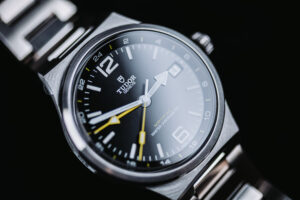
TUDOR celebrates its centenary in 2026 with a varied group of new watches. We look at four of the most significant releases so far, including the returning Northflag and the limited Black Bay Chrono “Carbon 26”.
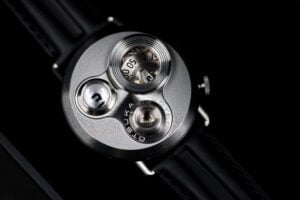
Discover Otsuka Lotec, founder Jiro Katayama and the No.7.5 jumping-hour watch, including its movement, 2023 updates and pre-owned buying advice.
You must be logged in to post a comment.